It's not been so long since we left Panama City, but in Bike and Build time it might as well be a month. A quick run-down of recent highlights include watching dolphins jump and hunt fish in the Gulf, savoring the best shrimp creole on either side, bayou, or delta of the MIssissippi, and visiting Beauvoir, the last home of Jefferson Davis, where the staff granted myself and new best friends Zhi, Caroline, and Chelsea not only free admission but a generous dollar donation. It might have felt odd to receive such warmth and support from an organization that parades the stars and bars, but I already believe that our commitment to the USA as a single community and the inspiration spread around by what we are doing cuts across even the most entrenched political divide!
Two recent experiences, though, stand out, and help to highlight just how wonderful this experience is. The first came as we left Pensacola for Mobile, Alabama (the city which offered up the title for this post, which was apparently a 20's, make that 1820's, phrase denoting a thing of exceptional quality). Myself and frequent riding partner Zhi, who races for NYU, were going along at a good clip when he suffered another one of what has proved a despicable streak of flats. With a sigh we pulled off to change the tube, itching to get back on the road and knock out as many miles as we could before the heat rose. Zhi set to work, but an abnormally loud rumble of a jet engine drew my eyes skyward. Suddenly a Navy jet adorned with the blue and yellow of the Blue Angels came screaming over the tree tops, just a few hundred yards over our heads. We could read all the markings clearly for a few seconds, before the pilot pulled into a steep climb and a seemingly effortless flip turn to join 3 of his comrades for some supremely excellent formation flying. Poor Zhi tried hard to quickly change his deflated tube, but my shouts of "Whoaa" and exhortations to look up as the jets looped, turned and barrel-rolled just over our heads, probably complicated matters for him. Other riders rolled by as we all exchanged amazed looks, and we were back on the road as the impromptu air show seemed to subside. This is one of the many wonders encountered when cycling across the country!
Another unique experience came in our ride into New Orleans. The day was impressively hot, with a heat index into the 110s, and we rode hard to get into the city to beat the heat and arrive in time for the USA v. England World Cup match. We made it, found an a/c restaurant in which to watch the game, and were treated to deeply discounted local fare. I ate more gumbo and shrimp po'boys than even I had thought possible, and after my comrades slept through the second half we rolled down Bourbon Street to our host. That experience, riding through the French quarter and drawing stares in our Bike and Build jerseys, is probably the closest I'll get to what American GIs felt when they liberated Paris.
I'll have a great deal more to say about our first few days in New Orleans soon. Sunday we explored the city, listened to street music, found two festivals, and generally enjoyed ourselves to the extreme. Today was our first build day, and we spent it in the lower 9th ward spackling drywall and speaking with folks who lost all they owned, and many of them close family members. Those two dimensions of my experience in this city has made for quite a bit to digest, but I feel already that this is the most unique and compellingly interesting city I've yet set foot in.
"I didn't know that a home could float, before Katrina"
Mac, a lifelong resident of the 9th ward who has returned and poured all of his energy and resources into a nascent community center for the neighborhood. "I sometimes say that Katrina was the best thing that happened to me. I ain't never been so happy, or so broke."
Monday, June 14, 2010

“Life. Is. Difficult!”
Here's the bit I wrote for our trip journal, which you can follow here. Also look for some photos there!
Luke's Journal, Day 7
Today was probably our toughest to date. We put in nearly 90 miles to get from DeFuniak Springs, Florida (which boasts one of only two perfectly circular natural lakes in the world, and yes, we [unnecessarily] cycled the circumference) to Gulf Breeze, just outside Pensacola. We knew the day would be hot, and so got off to an early start, up at 0500 and rolling out on our bikes before 7AM. In the morning the wind was with us; I and a few others averaged a cool 20 mph and even with a couple stops (free coffee, used book store . . . yes!) put in almost 40 miles before stopping for lunch around 10:30.
Heading out from lunch we felt the heat building fast. Though the air temperature hovered in the mid-90s, the heat index approached 110, and we felt it. To compound our difficulties, we were pedaling an especially un-scenic, high-traffic, and gravel-ridden stretch of pavement re-radiating the noonday heat like a bed of hot coals. Agitated and saddle-sore, we regrouped for a water break and opted to cross the intra-coastal waterway and reroute across the thin spit of land between the waterway and the Gulf. It proved a good decision, as immediately the traffic died down and a broad and beautiful view of sand and sea opened up before us.
Still, the sun was on top of us and our hoped-for breeze came in the form of a bruising headwind. Our average speed sank and our legs soon felt like we were spinning our wheels in sand. As we made our way through the eerily deserted town of Navarre Beach, we noticed not just the dearth of beach-goers but a few dozen men in reflective vests patrolling the shore, looking for washed-up oil and tar balls.
If this was something of a desolate and depressing scene on an already draining day, I quickly reminded myself that in a matter of weeks our group would be facing longer rides through deserts hotter, drier, and emptier. There will still be sand, I thought, but no sign of water or wind or beach huts selling cold drinks.
We battled onward, but the strength faded from our bodies as the afternoon wore past four o’ clock. Finally, we sighted the high bridge which we knew would bring us just a few short blocks from our host, and with a burst of energy I mashed my gears to get to the top. It was at that point that the bit of adversity we had faced for the day came into perspective against the reason why we ride: we faced some unfavorable winds and weather, but suffered nothing like the troubles of those against whom our social order and prevailing economic conditions have stacked the odds and shorted their hand.
More than a few people have already responded to us with sneers and a diatribe against handouts for people “who need to do for themselves.” What they fail to realize (and what we try, respectfully, to point out) is that, first, the playing field is not level. More importantly, and to use a favorite Habitat catch phrase, what we’re aiming to accomplish is not a hand out but a hand up. The recipients of Habitat homes (funded more and more frequently with Bike and Build donations!), after a long and grueling application process, perform up to 400 hours of what is aptly termed “sweat equity.” This takes the form of labor at the construction site itself, volunteering on other H4H sites, and attending classes on financial management and the basics of home ownership. In short, the sweat expended by our 33 team members today (and that’s no small figure when every person rode every mile despite the heat, the distance, flat tires, etc.) is a drop in the bucket compared to the commitment of those who receive the “charity” we are working to offer.
As I learned on the playing fields of the Vassar College Rugby Football Club (many members of which have donated generously to this cause), “Life is Difficult!” (insert a Briton’s accent and emphasis.) Even if that is so, it is by overcoming its difficulties that we manifest life’s finer fruits, and we do it best when it’s done not just for ourselves.
A special thank you goes out to Sheryl and the Gulf Breeze United Methodist Church, which with their incredibly generous accommodations and provisions brought us like the Israelites out of the desert and into the land of milk and honey (and pleasantly raging a/c)!
Luke's Journal, Day 7
Today was probably our toughest to date. We put in nearly 90 miles to get from DeFuniak Springs, Florida (which boasts one of only two perfectly circular natural lakes in the world, and yes, we [unnecessarily] cycled the circumference) to Gulf Breeze, just outside Pensacola. We knew the day would be hot, and so got off to an early start, up at 0500 and rolling out on our bikes before 7AM. In the morning the wind was with us; I and a few others averaged a cool 20 mph and even with a couple stops (free coffee, used book store . . . yes!) put in almost 40 miles before stopping for lunch around 10:30.
Heading out from lunch we felt the heat building fast. Though the air temperature hovered in the mid-90s, the heat index approached 110, and we felt it. To compound our difficulties, we were pedaling an especially un-scenic, high-traffic, and gravel-ridden stretch of pavement re-radiating the noonday heat like a bed of hot coals. Agitated and saddle-sore, we regrouped for a water break and opted to cross the intra-coastal waterway and reroute across the thin spit of land between the waterway and the Gulf. It proved a good decision, as immediately the traffic died down and a broad and beautiful view of sand and sea opened up before us.
Still, the sun was on top of us and our hoped-for breeze came in the form of a bruising headwind. Our average speed sank and our legs soon felt like we were spinning our wheels in sand. As we made our way through the eerily deserted town of Navarre Beach, we noticed not just the dearth of beach-goers but a few dozen men in reflective vests patrolling the shore, looking for washed-up oil and tar balls.
If this was something of a desolate and depressing scene on an already draining day, I quickly reminded myself that in a matter of weeks our group would be facing longer rides through deserts hotter, drier, and emptier. There will still be sand, I thought, but no sign of water or wind or beach huts selling cold drinks.
We battled onward, but the strength faded from our bodies as the afternoon wore past four o’ clock. Finally, we sighted the high bridge which we knew would bring us just a few short blocks from our host, and with a burst of energy I mashed my gears to get to the top. It was at that point that the bit of adversity we had faced for the day came into perspective against the reason why we ride: we faced some unfavorable winds and weather, but suffered nothing like the troubles of those against whom our social order and prevailing economic conditions have stacked the odds and shorted their hand.
More than a few people have already responded to us with sneers and a diatribe against handouts for people “who need to do for themselves.” What they fail to realize (and what we try, respectfully, to point out) is that, first, the playing field is not level. More importantly, and to use a favorite Habitat catch phrase, what we’re aiming to accomplish is not a hand out but a hand up. The recipients of Habitat homes (funded more and more frequently with Bike and Build donations!), after a long and grueling application process, perform up to 400 hours of what is aptly termed “sweat equity.” This takes the form of labor at the construction site itself, volunteering on other H4H sites, and attending classes on financial management and the basics of home ownership. In short, the sweat expended by our 33 team members today (and that’s no small figure when every person rode every mile despite the heat, the distance, flat tires, etc.) is a drop in the bucket compared to the commitment of those who receive the “charity” we are working to offer.
As I learned on the playing fields of the Vassar College Rugby Football Club (many members of which have donated generously to this cause), “Life is Difficult!” (insert a Briton’s accent and emphasis.) Even if that is so, it is by overcoming its difficulties that we manifest life’s finer fruits, and we do it best when it’s done not just for ourselves.
A special thank you goes out to Sheryl and the Gulf Breeze United Methodist Church, which with their incredibly generous accommodations and provisions brought us like the Israelites out of the desert and into the land of milk and honey (and pleasantly raging a/c)!
Saturday, June 5, 2010
Panama City, Florida
Yesterday we entered Bay County, Florida, and, without expecting it, found ourselves on Central Standard Time! Having just the day before been amazed at the speed with which we crossed the Floridian Peninsula, for me this was another marker of just how incredible a machine the bicycle is. Now I've appreciated this fact for some time, from when a bike first expanded my 13 year-old horizons to enable trips to swimming holes 7 or 8 miles away, made my college commute to class almost instantaneous, and showed me that traversing DC's city streets with 30+ lbs of groceries was not only possible but offered a unique kind of satisfaction.
Now that my days, measured in miles, are timed by thousands of pedal strokes and the steady thrum of two wheels on the road, there's ample opportunity to dwell on just what bikes can do. They've carried 33 people who range from racing cyclists to those who still go cross-eyed at the mention of "derailleur" about 450 miles in less than a week. Most of all, they're powered by a renewable energy resource which our country enjoys in superabundance: calories! Even after doing about 400 miles in 5 days, I can now tell you how quickly a generously provided Southern Breakfast (thank you Sopchoppy Baptist Church!) will put fuel in the muscles and energy coursing in the blood vessels.
That our mode of transport just happens to display the virtues of forsaking vehicles glutted on gasoline is especially poignant as the towns we see brace themselves for the impact of oil on their shores. It is clear to the people here that BP will be unable to do anything to staunch the flow of oil into the Gulf until August, when they will attempt, in the middle of hurricane season, to drill a second hole which they hope will relieve the pressure enough to stop the spill. No one is holding their breath; the oyster fishermen in Apalachicola and the beach shop owners in Parker, Fl, and Panama City all know that their hard-earned livelihood and their communities will be utterly devastated, if not completely destroyed. The sense of impending disaster is palpable, and as we head west and hear that oil is now lapping the shores of Mobile and Pensacola we understand that we're getting a last glimpse of this very beautiful place as it never will be again.
If that's a slightly somber tone for what should be (and is) an overwhelmingly exciting and positive experience, it's worth asking how we got here, and where (and how) we go.
Now that my days, measured in miles, are timed by thousands of pedal strokes and the steady thrum of two wheels on the road, there's ample opportunity to dwell on just what bikes can do. They've carried 33 people who range from racing cyclists to those who still go cross-eyed at the mention of "derailleur" about 450 miles in less than a week. Most of all, they're powered by a renewable energy resource which our country enjoys in superabundance: calories! Even after doing about 400 miles in 5 days, I can now tell you how quickly a generously provided Southern Breakfast (thank you Sopchoppy Baptist Church!) will put fuel in the muscles and energy coursing in the blood vessels.
That our mode of transport just happens to display the virtues of forsaking vehicles glutted on gasoline is especially poignant as the towns we see brace themselves for the impact of oil on their shores. It is clear to the people here that BP will be unable to do anything to staunch the flow of oil into the Gulf until August, when they will attempt, in the middle of hurricane season, to drill a second hole which they hope will relieve the pressure enough to stop the spill. No one is holding their breath; the oyster fishermen in Apalachicola and the beach shop owners in Parker, Fl, and Panama City all know that their hard-earned livelihood and their communities will be utterly devastated, if not completely destroyed. The sense of impending disaster is palpable, and as we head west and hear that oil is now lapping the shores of Mobile and Pensacola we understand that we're getting a last glimpse of this very beautiful place as it never will be again.
If that's a slightly somber tone for what should be (and is) an overwhelmingly exciting and positive experience, it's worth asking how we got here, and where (and how) we go.
Thursday, June 3, 2010
Habitat for Hu-Manatee!
On Sunday we dipped our tires in the Atlantic and headed west, with nights in Lake City, Callahan, Perry, and Sopchoppy, Florida. Since then we've built (approximately) one house, biked 350 miles, and swum with manatees (and gators). I've been surprisingly unsore, and with all the hospitality, good will and calories we've received from folks along the way it's hard not to stay energized. My highlight so far is cranking out 8 miles in about 20 minutes to swim the clear, cold Wakula Springs in a mangrove forest outside Sopchoppy. That or the 2 lbs of ice cream I put down after finishing 80 miles on Monday. I'll try to get some pictures up soon! I should add that you can follow our route on the bike and build website: www.bikeandbuild.org with daily updates on mileage, journal entries, and other good stuff.
Another fun fact I realized today (when we sighted the Gulf of Mexico through the Loblolly Pines): ours is the only Bike and Build route that hits three coasts! It's incredible we've put the peninsula behind us so quickly.
For breakfast I had 2 bananas and three plates of eggs, bacon, grits, and biscuits with gravy and Tupelo honey (apparently the Apalachicola Basin makes the best stuff in the world).
"Well Florida sounds like a colorful, lawless swamp, if it's a real place . . "
THIS TRIP IS AWESOME.
Another fun fact I realized today (when we sighted the Gulf of Mexico through the Loblolly Pines): ours is the only Bike and Build route that hits three coasts! It's incredible we've put the peninsula behind us so quickly.
For breakfast I had 2 bananas and three plates of eggs, bacon, grits, and biscuits with gravy and Tupelo honey (apparently the Apalachicola Basin makes the best stuff in the world).
"Well Florida sounds like a colorful, lawless swamp, if it's a real place . . "
THIS TRIP IS AWESOME.
Wednesday, April 28, 2010
Fortune Favors the Bold, Not the Ill-Prepared
On almost every one of my many rides up through Rock Creek Park and into the well-tracked wilds of suburban Maryland, I wonder what it might be like to get a flat tire out there in the farthest reaches of my usual routes. What would I, sans-tube, do? How would I make it the 10 or 15 miles back to my home in the city?
Out this morning on a quick jaunt to the park limits, my rear wheel whacked one of Beach Drive's many potholes, just after I made the turn to head home. The low hiss of air escaping quickly and the fingers-in-gelatin feel of the wheel rim against rubber told me truly: God cut me down. After a few profanities both mouthed and voiced, and self-flagellation over my forsaking the CamelBak stocked with spares, tire irons, and a hand pump, I realized that there was just one thing to do in this oft-imagined situation: walk. And I did, muttering to myself about that inch between success and disaster, the haphazard ease with which human plans are torn asunder by an unfeeling cosmos, and the "opportunities" we have to "grow" and "learn acceptance" when we confront these facts.
Walking the couple miles towards the park station to ring for a cab, I was at least heartened by the more than few offers of aid that came from passing cyclists ("You OK?" - "I'm fine, thanks, just screwed without a spare" - "Yep, that bites"). To wait for my very expensive ride home, I took up the single sunny spot by the creek, and recalled that there are worse ways to spend a spring morning. The too-brief draughts of warm sunshine, though, were not enough to stem the tide of early-morning chill, and I was soon looking for a place to warm my hands (hard to find for the spandex-clad). Just as my teeth began to chatter, my knight in a black and yellow Ford Crown Victoria arrived, and I was wisked home for the pretty price of a decent dinner.
The glaring lesson, of course, is one in preparedness: cyclists should carry spare tubes like boats got lifejackets. I think that this has been suitably impressed up on me.
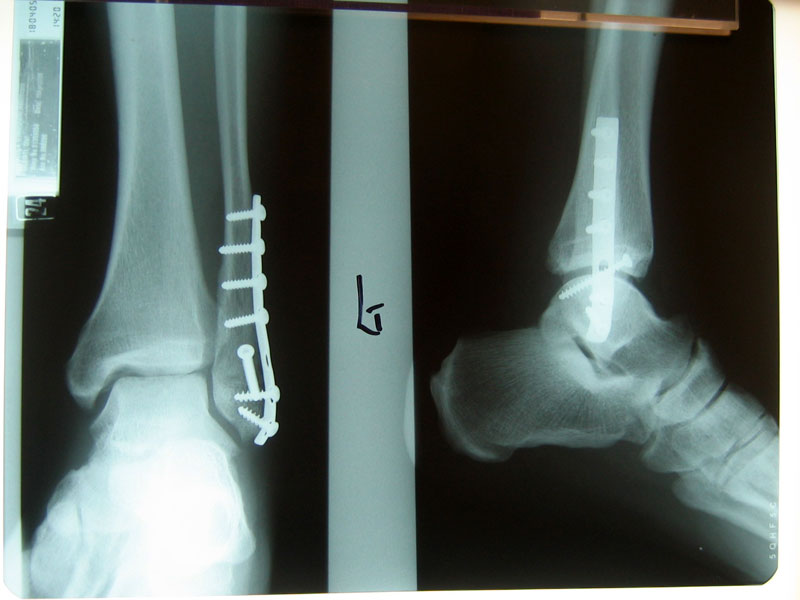
Another point, though, is that we often fail to consider that accidents fall on a sliding scale. I've just begun reading one of JM Coetzee's lesser-known novels, The Slow Man. In the first paragraph, Paul Rayment suffers the loss of his leg in a collision with a truck (he was cycling, of course). I identify with the cycling aspect, and more deeply with facing up to getting around on one leg (though I, unlike M. Rayment, was lucky enough to have my busted-up limb reconstructed rather than amputated). Comparatively, an inconvenient flat tire is obviously on the trivial end of the aw-crap scale.
And how does this all relate to affordable housing? Well, to bring it home with broad brush strokes, an accident may foul our plans (and perhaps our propulsion), set our world wobbling on its axis, and redefine our experience with new and unexpected limits. For these reasons we try to prevent accidents and plan contingencies. It's altogether different when, for some, limited opportunity and contracted horizons are product, part, and parcel of our social machinery. For accidents we should learn acceptance and perspective; perspective on societal inequity of opportunity, though, should move us to take up tools and ready ourselves to fine-tune the system, or maybe do some serious re-engineering.
Maybe there will be more on this as I get further into the book, and back out on the road . . . (with spares, of course!)
Out this morning on a quick jaunt to the park limits, my rear wheel whacked one of Beach Drive's many potholes, just after I made the turn to head home. The low hiss of air escaping quickly and the fingers-in-gelatin feel of the wheel rim against rubber told me truly: God cut me down. After a few profanities both mouthed and voiced, and self-flagellation over my forsaking the CamelBak stocked with spares, tire irons, and a hand pump, I realized that there was just one thing to do in this oft-imagined situation: walk. And I did, muttering to myself about that inch between success and disaster, the haphazard ease with which human plans are torn asunder by an unfeeling cosmos, and the "opportunities" we have to "grow" and "learn acceptance" when we confront these facts.
Walking the couple miles towards the park station to ring for a cab, I was at least heartened by the more than few offers of aid that came from passing cyclists ("You OK?" - "I'm fine, thanks, just screwed without a spare" - "Yep, that bites"). To wait for my very expensive ride home, I took up the single sunny spot by the creek, and recalled that there are worse ways to spend a spring morning. The too-brief draughts of warm sunshine, though, were not enough to stem the tide of early-morning chill, and I was soon looking for a place to warm my hands (hard to find for the spandex-clad). Just as my teeth began to chatter, my knight in a black and yellow Ford Crown Victoria arrived, and I was wisked home for the pretty price of a decent dinner.
The glaring lesson, of course, is one in preparedness: cyclists should carry spare tubes like boats got lifejackets. I think that this has been suitably impressed up on me.
Another point, though, is that we often fail to consider that accidents fall on a sliding scale. I've just begun reading one of JM Coetzee's lesser-known novels, The Slow Man. In the first paragraph, Paul Rayment suffers the loss of his leg in a collision with a truck (he was cycling, of course). I identify with the cycling aspect, and more deeply with facing up to getting around on one leg (though I, unlike M. Rayment, was lucky enough to have my busted-up limb reconstructed rather than amputated). Comparatively, an inconvenient flat tire is obviously on the trivial end of the aw-crap scale.
And how does this all relate to affordable housing? Well, to bring it home with broad brush strokes, an accident may foul our plans (and perhaps our propulsion), set our world wobbling on its axis, and redefine our experience with new and unexpected limits. For these reasons we try to prevent accidents and plan contingencies. It's altogether different when, for some, limited opportunity and contracted horizons are product, part, and parcel of our social machinery. For accidents we should learn acceptance and perspective; perspective on societal inequity of opportunity, though, should move us to take up tools and ready ourselves to fine-tune the system, or maybe do some serious re-engineering.
Maybe there will be more on this as I get further into the book, and back out on the road . . . (with spares, of course!)
Sunday, March 28, 2010
The long and winding road...
This weekend my training took a turn for the intense. I have had my new bike for some time now, and had racked up some decent miles to date, but at some point one must put the rubber to the road and test the limits. With a couple friends down in Charlottesville, Virginia, and more from New York coming through DC to visit them there, a perfect opportunity for a long ride presented itself. So I packed my bag (er, CamelBak) and after $2.45 in Metro fare, 200 oz of water, 3 Clif Bars and 112 miles, I was basking in the afterglow of a hard day's cycling and the company of good friends. That, though, is a bit too neat and rosy a statement to capture the full experience.
I set out Saturday AM on the metro from my home in the middle of Washington, DC. The blue line to Franconia offered a chance to take a chunk out of the high traffic roads I'd have to travel, and I was able to route a nice cut over which ran on by Burke Lake and towards Manassas. A brief aside: Virginians take their highway clean up seriously. A plethora of community organizations, boy scout troops, and one oddball menagerie that chose to denote itself as "Angry Rednecks Who Hate Litter" are apparently proud participants in Virginia's Adopt-A-Highway program. The Angry Rednecks' stretch sure was litter free, but I would have appreciated their removing a stray beaver carcass which, in the warm March sun unique to the Mid-Atlantic, proved the most powerful odor I came across all trip.
I was a bit spoiled by this early run through tree-lined single lane roads, and as I skirted the southern fringe of Manassas I reentered the suburban sprawl for which Northern Virginia is known. My sails still full with my first wind, though, I pedaled on through to 28-S, and as the highway interchanges, strip malls, and McMansions of Manassas fell away behind me I came into the world of verdant fields and ruminating livestock, as well as the full fragrance one might imagine in both, in which I would dwell for the rest of my Saturday on the road. I stayed strong on up to the 45 mile mark, and there first felt my energy falter. A decent rest on a hilltop and a few Clif bars had me back on my feet in no time, and I stayed strong, despite battling a potent headwind, all the way through the rolling hills of Rapidan Road into Orange, Virginia and just over the 80 mile mark.
Another rest and a meal there steeled me for the final push down the Constitution Highway into Charlottesville. The sun was drawing closer to the Blue Ridge Mountains off to the west. The first 12 of the last 28 miles were covered rapidly, but into the mid-90 mile mark there were more hills, screaming quads, and my pace was often reduced to a tortured crawl. The sun was setting and a chill in with it, and it was neither strength or energy but willpower only which kept my legs moving even as they cramped. I came into the city as its lights came up, and found my way to my friends in almost complete darkness. I cannot say that I came in like a conquering hero, in fact I was fairly vanquished by the whole ordeal. But I can say that I did it, and that this is just the first of many more trying trips and moments for setting my mind over the matter of my body.
I set out Saturday AM on the metro from my home in the middle of Washington, DC. The blue line to Franconia offered a chance to take a chunk out of the high traffic roads I'd have to travel, and I was able to route a nice cut over which ran on by Burke Lake and towards Manassas. A brief aside: Virginians take their highway clean up seriously. A plethora of community organizations, boy scout troops, and one oddball menagerie that chose to denote itself as "Angry Rednecks Who Hate Litter" are apparently proud participants in Virginia's Adopt-A-Highway program. The Angry Rednecks' stretch sure was litter free, but I would have appreciated their removing a stray beaver carcass which, in the warm March sun unique to the Mid-Atlantic, proved the most powerful odor I came across all trip.
I was a bit spoiled by this early run through tree-lined single lane roads, and as I skirted the southern fringe of Manassas I reentered the suburban sprawl for which Northern Virginia is known. My sails still full with my first wind, though, I pedaled on through to 28-S, and as the highway interchanges, strip malls, and McMansions of Manassas fell away behind me I came into the world of verdant fields and ruminating livestock, as well as the full fragrance one might imagine in both, in which I would dwell for the rest of my Saturday on the road. I stayed strong on up to the 45 mile mark, and there first felt my energy falter. A decent rest on a hilltop and a few Clif bars had me back on my feet in no time, and I stayed strong, despite battling a potent headwind, all the way through the rolling hills of Rapidan Road into Orange, Virginia and just over the 80 mile mark.
Another rest and a meal there steeled me for the final push down the Constitution Highway into Charlottesville. The sun was drawing closer to the Blue Ridge Mountains off to the west. The first 12 of the last 28 miles were covered rapidly, but into the mid-90 mile mark there were more hills, screaming quads, and my pace was often reduced to a tortured crawl. The sun was setting and a chill in with it, and it was neither strength or energy but willpower only which kept my legs moving even as they cramped. I came into the city as its lights came up, and found my way to my friends in almost complete darkness. I cannot say that I came in like a conquering hero, in fact I was fairly vanquished by the whole ordeal. But I can say that I did it, and that this is just the first of many more trying trips and moments for setting my mind over the matter of my body.
Wednesday, March 3, 2010
On February 19, I spent a Friday away from work (sweat equity never felt so good!) volunteering with Habitat for Humanity of Washington, DC. Now I’ve participated in build projects before, from the Hudson Valley in New York to Highlands County, FL, but the project in DC is unique for its sheer scale. At a 53-home development in Northeast DC which already accommodates nearly forty families, a crew of Americorps volunteers and armies of weekend volunteers stay on pace to build ten new homes each year. DC has only recently begun to rebound from decades of urban decay following major riots in 1968, and the significance of the H4H effort here was enough to prompt a visit from the President and First Lady on September 11 of last year.
Against that broad background, my part in this project was as small as a 6’ x 8’ room. I hung sheet rock in what may become, of all things, an elevator shaft. This home – something of an anomaly among affordable housing’s usually simple, one-story floor plans – is being built to American Disability Association specifications. That means bigger bathrooms, a very unique kitchen and, because it’s multi-story, plans for an elevator! I have hung sheet rock many times, but working on a new site inevitably brings fresh experience (sheetrocking an elevator shaft), new skills (“Glue before you screw!”), and new vocabulary: “cripple” (stud), “mud” (spackle), and “heat gun” (propane-fired heat artillery - er, space heater, which also goes under “fresh experience”).
The bottom line is, even if you have volunteered on build sites before, your sweat equity hours are an opportunity to hone your skills, learn new things, and experience the great work that’s being done on affordable housing beyond even the impressively expansive boundaries of Bike and Build!
Against that broad background, my part in this project was as small as a 6’ x 8’ room. I hung sheet rock in what may become, of all things, an elevator shaft. This home – something of an anomaly among affordable housing’s usually simple, one-story floor plans – is being built to American Disability Association specifications. That means bigger bathrooms, a very unique kitchen and, because it’s multi-story, plans for an elevator! I have hung sheet rock many times, but working on a new site inevitably brings fresh experience (sheetrocking an elevator shaft), new skills (“Glue before you screw!”), and new vocabulary: “cripple” (stud), “mud” (spackle), and “heat gun” (propane-fired heat artillery - er, space heater, which also goes under “fresh experience”).
The bottom line is, even if you have volunteered on build sites before, your sweat equity hours are an opportunity to hone your skills, learn new things, and experience the great work that’s being done on affordable housing beyond even the impressively expansive boundaries of Bike and Build!
Subscribe to:
Comments (Atom)